

Short answer: For most Dallas small businesses, outsourcing accounting costs less and gives more coverage than one in-house hire: you get a bookkeeper, a reviewer and backup for one monthly fee, without payroll taxes, benefits or turnover risk. In-house accounting starts to make sense when the daily workload fills a full-time role and you need someone on site, ideally with outside review on top.
Key takeaways
- In-house accounting means employees on your payroll; outsourcing means a firm does the work for a set fee.
- An in-house hire costs more than the salary: employer payroll taxes, benefits, software, training and your review time.
- One employee means one point of failure; an outsourced team has backup and a second reviewer.
- You keep control either way if you own the software, the data and payment approvals.
- Many growing businesses mix the two: daily tasks in-house, close and review outsourced.

In-house accounting vs. outsourcing: what each means
In-house accounting means the people who keep your books are your employees. They work in your systems, follow your procedures and report to you. Depending on size, that is one bookkeeper, or a bookkeeper plus an accountant or controller.
Outsourced accounting means a firm does the work for a monthly fee. A good firm assigns named people, works in your QuickBooks file, reconciles every account, and sends reviewed statements on a set date. The work happens remotely through secure cloud access, so the firm does not need to be in your office. Our guide to local vs. national bookkeeping services explains why a Dallas-area firm can still matter.
Side-by-side comparison for a small business
| Factor | In-house accounting | Outsourced accounting |
|---|---|---|
| What you pay | Salary plus employer payroll taxes, benefits, software and training | One monthly fee, usually fixed and set in a written proposal |
| Coverage | One person; vacation, illness or a resignation stops the work | A team; work continues when one person is out |
| Review | Only if you or another employee check the work | A senior reviewer before statements reach you, at firms that offer it |
| Skills | Whatever one hire knows | Bookkeeper, senior accountant and advisory skills as needed |
| On-site presence | Yes: can handle mail, deposits and walk-up questions | Remote; documents move through secure cloud systems |
| Scaling up or down | Hire, train or let go | Change the scope or service tier |
| Control of data | In your systems | In your systems too, if you own the software subscription |
How to read this table: the first three rows decide most cases. If losing one person would stop your books, or nobody checks the work before it reaches you, outsourcing fixes both. The on-site row is the main reason to keep someone in-house.
The real cost of an in-house accountant
The salary is only the visible part. When you hire an employee, you also take on taxes the employee never sees, plus the costs of keeping that person productive.
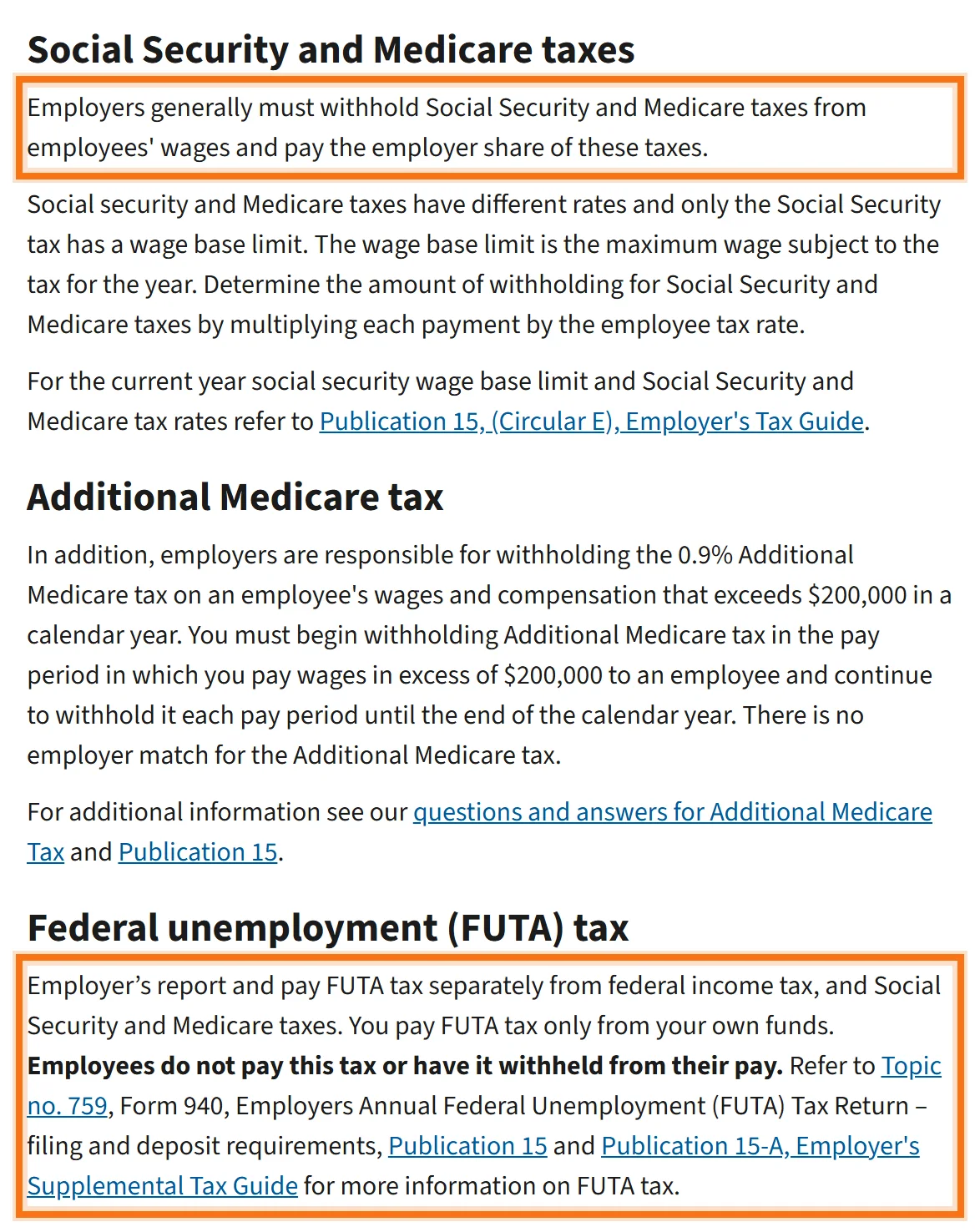
- Employer payroll taxes: your share of Social Security and Medicare, federal unemployment (FUTA) and Texas state unemployment tax.
- Benefits and paid time off: health insurance, retirement contributions and the weeks the work waits while the person is away.
- Software and equipment: an accounting software seat, a computer and any add-on apps.
- Hiring and training: recruiting time, onboarding, and repeating both when the person leaves.
- Your review time: someone still has to check the work; in a small business that is usually the owner.
Outsourcing replaces that list with one fee. At LUCI Financial Solutions every plan is a fixed monthly fee set after a discovery call, based on transaction volume, number of accounts, payroll and how much reporting and strategy you need. See what bookkeeping costs in Dallas for how firms price the work.
When in-house accounting makes sense
In-house accounting is a sound choice in some situations:
- The daily workload, such as billing, payables, collections and payroll entry, fills at least one full-time role.
- You need someone on site for deposits, mail, inventory counts or walk-up questions from staff.
- Your industry needs constant, real-time entry, such as job costing on many active projects.
- You already have a controller or experienced accountant who can review the work.

Even then, many businesses keep outside review: the in-house person handles the daily work and an outside firm reconciles, closes and reviews each month. That split keeps the convenience of an employee and adds the review a single employee cannot give their own work.
When outsourcing accounting is the better fit
Accounting outsourcing for small business works best when:
- The books need a few days of work a month, not a full-time person.
- The owner is doing the books at night or reviewing them alone.
- One employee holds all the knowledge, and nobody else could close the month if they left.
- You want reviewed statements on a set date and someone to explain them.
- You expect to need more later, such as budget-to-actual reporting, cash flow forecasting or CFO advice, without hiring for it.
A simple test helps. Write down how many hours a month the books really take today, who checks them, and what happens if that person is gone for three weeks in March. If the hours are well under a full-time week, nobody checks the work, or the answer to the last question is “the books stop,” an outsourced team is usually the cheaper and safer way to cover the work.
If you are already outgrowing a single bookkeeper, our articles on a dedicated bookkeeper vs. a bookkeeping team and signs you have outgrown your bookkeeper cover the next step.
How to keep control when you outsource
- Own the software. The QuickBooks Online subscription should be in your business’s name, with the firm invited as a user.
- Keep payments with you. The firm can prepare bills and payroll; you approve and release the money.
- Get a delivery date in writing. Know which day each month the reviewed statements arrive.
- Ask who does and who reviews the work. Named people, not a queue.
- Check the exit terms. You should be able to leave with your data and month-to-month terms after the first period.
How LUCI Financial Solutions works with Dallas businesses
LUCI is a Dallas–Fort Worth bookkeeping and financial operations firm for established service businesses, typically those earning $250K or more a year. A bookkeeper handles day-to-day entries and reconciliations, a senior accountant reviews the statements before delivery, and founder LaTara Scott, MBA, leads advisory work. Every client starts with Core: monthly bookkeeping and reconciliations, senior review, and a monthly Executive Summary, Profit & Loss, Balance Sheet and Statement of Cash Flows. Growth and Scale add reporting, reviews and CFO-level planning.
The initial commitment is three months, then month to month. If you are not sure where your books stand, the $597 Financial Review & Assessment is a 60-minute review of your QuickBooks file with a prioritized action plan. See bookkeeping services in Dallas or outsourced accounting in Dallas.
Frequently asked questions about in-house and outsourced accounting
What does in-house accounting mean?
In-house accounting means the bookkeeping and accounting work is done by people on your own payroll, in your own systems, under your own supervision. You hire, train, review and replace them yourself.
Is outsourcing accounting cheaper than hiring in-house?
For most small businesses, yes, because an outsourced firm replaces one salary plus employer payroll taxes, benefits, software, training and your review time with one monthly fee. Once the volume of work fills one or more full-time roles, an in-house team can make sense, often with outside review on top.
What accounting tasks can a small business outsource?
Transaction categorization, bank and credit card reconciliations, monthly financial statements, accounts payable and receivable, payroll processing, sales tax filing, 1099 preparation, cleanup of past months and, at a higher level, controller and fractional CFO work.
Will I lose control of my finances if I outsource?
Not if the setup is right. You should own the QuickBooks subscription and the data, keep bank and payment approval with you, receive reviewed statements on a set date, and be able to see every transaction at any time.
Can I mix in-house and outsourced accounting?
Yes, and many growing businesses do. A common split is an in-house person for daily billing, payables and payroll entry, with an outside firm reconciling, closing and reviewing the books each month.
Does LUCI Financial Solutions work with Dallas businesses that have in-house staff?
Yes. LUCI keeps the books for established Dallas–Fort Worth businesses and can also provide the monthly close, senior review and reporting on top of work an in-house employee already does, with the scope set in a fixed-fee proposal.
A team for the price of one fee
Monthly bookkeeping, senior review and reporting for Dallas–Fort Worth businesses. See our bookkeeping services in Dallas.